When Congress Stops Protecting the Public
Congress has tools to restrain presidential power. The harder question is whether it is willing to use them when doing so means confronting a president of its own party.
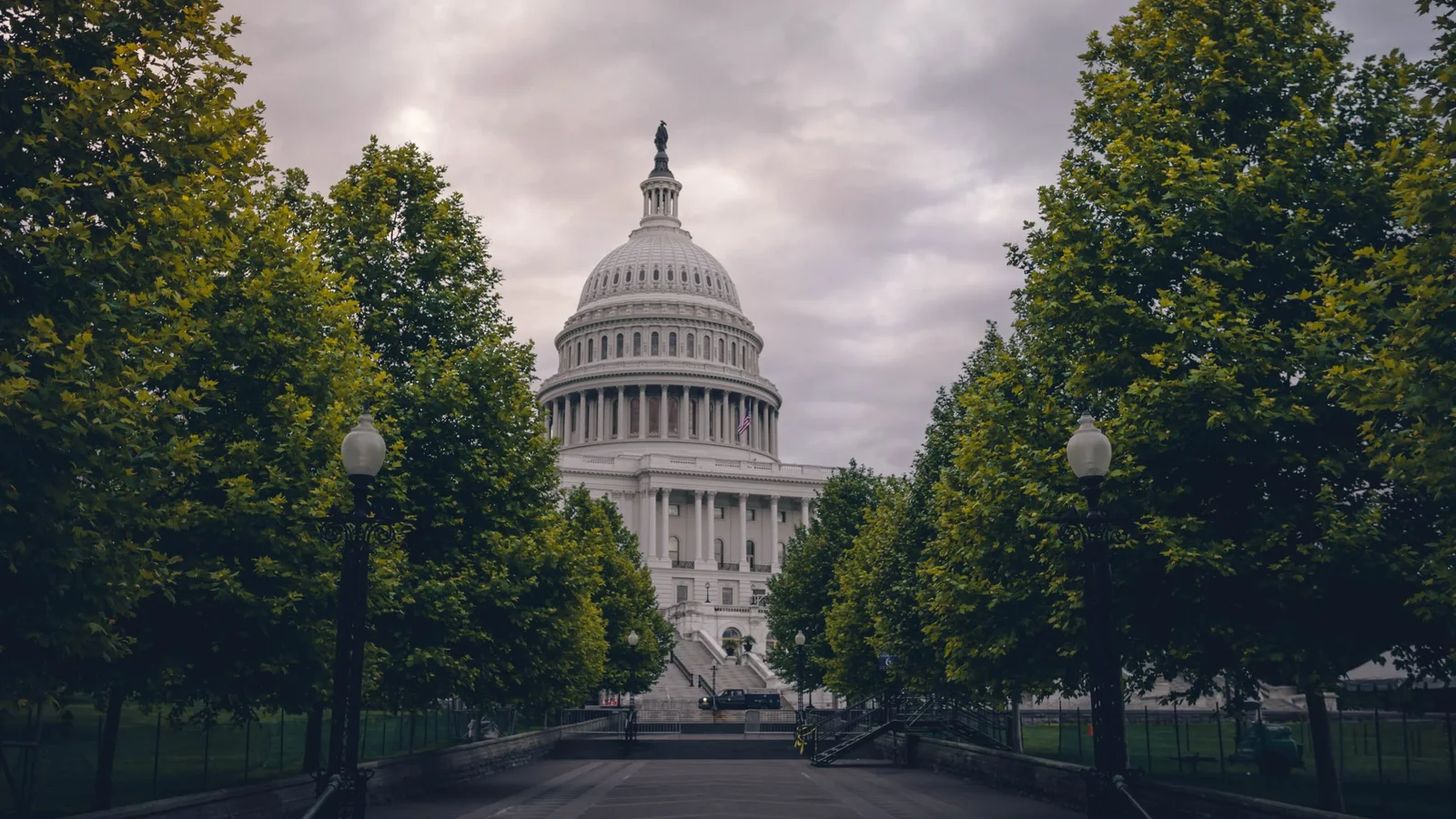
Congress has responsibilities more fundamental than passing bills. It is supposed to protect the interests of the American people: their money, their rights, the laws enacted in their name, and the institutions that keep public power from becoming personal power. That responsibility becomes most important when a president presses against the boundaries of his authority. During Donald Trump’s second presidency, those boundaries have been tested repeatedly. The more consequential story, however, is not simply that the president has pushed. It is how often the congressional majority has chosen not to push back.
There is an easy counterargument. Trump asserts authority, someone sues, and courts sometimes stop him. The Government Accountability Office identifies violations. Inspectors general challenge their dismissals. Seen from a distance, that can look like checks and balances working more or less as intended. But it leaves out the institution that was supposed to provide much of the checking. Congress possesses its own constitutional powers, statutory remedies, control over appropriations, and authority over the rules by which it conducts its business. When it declines to use them, other institutions are not merely supplementing congressional oversight. They are increasingly substituting for it.
This problem did not begin with Trump. The Obama administration argued that continued U.S. military operations in Libya did not constitute the kind of “hostilities” that triggered the War Powers Resolution’s termination requirement, and Congress never resolved the dispute through binding authorization or termination legislation. The Biden administration later attempted roughly $430 billion in student-loan cancellation under the HEROES Act, an interpretation the Supreme Court rejected because the statute did not authorize the program. Those disputes differed enormously in subject and circumstance, but they illustrate the same structural temptation: presidents stretch old authority toward new purposes, while legislators of the president’s party face incentives not to defend congressional prerogatives too aggressively.
In Federalist 51, James Madison wrote that “ambition must be made to counteract ambition.” Political parties complicate that design. When the presidency and Congress are controlled by the same party, protecting the institution can require legislators to frustrate the political leader whose success they also want. The current Congress faces exactly that test.
The public interest has a balance sheet
Start with money.
Donald Trump’s latest financial disclosure reported more than $1.4 billion in income from cryptocurrency ventures in 2025. Reuters’ review found that digital assets had become the dominant source of his reported income, while his administration pursued policies favorable to the cryptocurrency industry. The White House has rejected allegations of conflicts of interest, and the existence of a financial interest does not establish that any particular government decision was improperly influenced. But that is exactly why conflict-of-interest rules exist. Their purpose is to reduce the need to prove what happened inside someone’s head after a decision has already been made.
Congress confronted the issue directly on September 15, when the CLARITY Act, a major attempt to establish a federal regulatory framework for digital assets, failed to advance in the Senate. Ethics provisions involving public officials’ crypto holdings were among the contested issues, alongside disputes over banking and other regulatory questions. Four Republicans joined Democrats in voting against moving the bill forward.
That complicates any claim that Congress simply ignored the conflict. It did not. Senators debated it, negotiators attempted compromises, and legislation failed in part because agreement could not be reached.
But the episode also demonstrates the unresolved problem. Congress now knows that a president can hold extraordinary financial interests in an industry while his administration regulates that industry and Congress writes its governing statutes. Yet there is still no durable presidential conflict-of-interest rule addressing that circumstance. The useful standard is not whether anyone can prove that a specific decision was corrupt. It is whether citizens should have to investigate a president’s personal financial incentives every time government acts in an industry from which the president earns substantial income.
That is what rules are for.
A budget is not a suggestion
The spending fight is even more fundamental because Congress’s power of the purse is not an ethics convention. It is one of the basic divisions of authority in American government.
Anyone who has worked around local government understands this intuitively. A council adopts a budget. The executive administers it. If a borough manager simply decided not to spend appropriations because the manager disagreed with the council’s policy judgment, no council would shrug and wait several years for a court to sort it out. The political merits of the expenditure would be secondary to the obvious institutional question: who had the authority to decide?
Washington has managed to make the same proposition sound complicated.
The Impoundment Control Act was enacted after the Nixon administration to limit a president’s ability to withhold money Congress had appropriated. During Trump’s second term, GAO has found multiple violations involving executive-branch handling of appropriated funds, including Head Start, NIH grants, the Institute of Museum and Library Services and FEMA, while also finding other pauses lawful. The point is not that every spending dispute has been illegal. It is that Congress’s own watchdog has repeatedly concluded that the statutory line has been crossed.
The clearest illustration came in 2025. In June, the administration formally asked Congress to rescind billions of dollars Congress had previously appropriated. Congress considered the request, amended it, voted on it, and in July enacted the Rescissions Act of 2025, cancelling roughly $9 billion in foreign-aid and public-broadcasting funding. Whatever one thinks of those cuts, the constitutional process worked as designed. The president proposed changing existing law. Congress decided whether to agree.
About five weeks later, the administration took a different approach. On August 28 it transmitted another rescission request, this one covering $4.9 billion in 15 accounts. Every affected appropriation was scheduled to expire on September 30, while the statutory 45-day period Congress had to consider the rescission extended until October 23. GAO reiterated its longstanding conclusion that the Impoundment Control Act does not permit funds to be withheld through expiration simply because the 45-day review period has not ended; absent congressional approval of a rescission, the funds must be made available for prudent obligation before they expire.
Congress did not enact the rescission. It also did not enact a measure requiring the money to be released before expiration. Litigation followed, and the Supreme Court allowed the administration to continue withholding roughly $4 billion while the dispute proceeded, effectively allowing that money to lapse.
The contrast is revealing. In June, the administration asked Congress to cancel appropriations; in July, Congress voted and the law changed. In late August, the administration attempted to achieve cancellation through timing while Congress did not act.
The first is cooperation between branches. The second is the power of the purse changing hands by default.
The legislative response has been thin in both directions. Representative Don Beyer, a Virginia Democrat, introduced a bill in August 2026 that would create private and congressional rights of action to challenge Impoundment Control Act violations; as of this writing it has no cosponsors. Republican Representative Andy Harris of Maryland introduced H.R. 4229 in June 2025, with six Republican cosponsors, to require congressional approval before GAO could sue to compel the release of appropriated money. Neither has moved beyond committee. Members have proposed both strengthening and restricting the enforcement of Congress’s own spending decisions. The majority has advanced neither.
For governments, universities, nonprofits, and other recipients outside Washington, this is not constitutional trivia. Federal appropriations become revenue assumptions, grant awards, project schedules, payroll, and services on someone else’s balance sheet. Money promised but unpredictably withheld becomes budget risk for institutions that have little ability to absorb Washington’s institutional uncertainty.
Without an effective remedy, an appropriation begins to resemble advice.
Congress turned off one of its own switches
Tariffs provide an even clearer example because the House majority did not merely decline to use an oversight tool. It altered its procedures to make that tool harder to use.
Trump relied on emergency authority to impose broad tariffs beginning in 2025. The National Emergencies Act normally gives members of Congress expedited procedures for resolutions terminating a declared emergency. In March 2025, however, the Republican-controlled House approved a procedural rule, 216 to 214, that effectively prevented members from using that expedited process to force votes on Trump’s tariff emergencies during the remainder of the year.
Whatever one’s view of tariffs, the choice was significant. Congress has substantial constitutional authority over foreign commerce. It had also written a law giving itself a mechanism to reconsider emergency powers once a president invoked them. Faced with a president using that authority expansively, the House majority made congressional review more difficult.
The Supreme Court later rejected the administration’s use of IEEPA for the broad tariff program. Courts therefore supplied a boundary that the House had made more difficult for itself to consider through ordinary congressional procedures. The administration has since turned to other trade statutes, so the underlying question of what Congress will permit remains open.
The judiciary should not have to serve as Congress’s institutional self-respect.
A watchdog without an effective remedy
The treatment of inspectors general exposes the problem from another direction.
In January 2025, Trump removed inspectors general across the federal government without providing the 30 days’ advance notice and case-specific reasons required by statute. Eight of those inspectors general sued. On September 24, 2025, Judge Ana Reyes concluded that Trump had violated the Inspector General Act, but she declined to reinstate them. Among other considerations, the president could simply remove them again after satisfying the statutory notice requirements.
That ruling exposed the weakness of the existing law. Inspectors general did not have statutory for-cause tenure. Congress had required notice and substantive reasons, but the statute did not make removal impossible once those procedural requirements were satisfied. The law could therefore be violated while providing no remedy that restored the watchdogs to office.
The obvious response might once have been stronger for-cause protection. The Supreme Court’s June 2026 decision in Trump v. Slaughter, however, invalidated the FTC’s statutory for-cause removal protection and significantly strengthened presidential control over executive officials. The precise constitutional status of inspectors general is not necessarily identical to that of FTC commissioners, but Slaughter makes a simple for-cause solution much harder to defend.
The courts are not a guaranteed substitute for congressional work. The Supreme Court’s 2024 presidential-immunity decision also expanded protection for official presidential conduct, granting absolute immunity for actions within a president’s exclusive constitutional authority and at least presumptive immunity for other official acts. Courts sometimes restrain executive authority and sometimes define it more broadly. Congress cannot build an institutional strategy around the assumption that judges will preserve whatever balance Congress prefers.
The test is the next president
The simplest way to evaluate all of this is to remove Donald Trump’s name.
Imagine that the next president is someone you deeply distrust. Give that president the precedents being created now. Allow substantial private financial interests in industries affected by federal policy. Permit an administration to withhold appropriated money while enforcement mechanisms remain weak. Make congressional review of emergency authority procedurally difficult. Allow violations of oversight statutes to produce little practical remedy.
Does the arrangement still look acceptable?
It is a more durable test than whether one supports Trump’s policies. The powers attached to the presidency do not disappear when a different party wins an election.
What Congress could do
Congress is not powerless here. It could decide that presidential conflict-of-interest law should catch up with the modern presidency by establishing meaningful disclosure requirements and rules governing divestment, recusal, or financial interests in industries directly affected by federal policy. The rule should be written for presidents, not for Donald Trump.
It could strengthen the Impoundment Control Act by clarifying who has standing to enforce it, creating an effective remedy for unlawful withholding, and requiring public disclosure of apportionment and withholding decisions quickly enough for Congress and affected recipients to respond before money expires.
It could rewrite inspector-general protections around the constitutional landscape the Supreme Court has now created, using enforceable notice requirements, succession provisions, appropriations authority, and the Senate’s confirmation power rather than assuming a court will restore a fired watchdog after the fact.
And it could revisit emergency powers so that extraordinary authority expires unless Congress affirmatively renews it. That would reverse the current political incentive. Instead of requiring majorities to overcome procedural barriers to terminate emergency authority, a president would have to persuade Congress that continuing it was justified.
Each of those choices involves legitimate disagreements about presidential authority, congressional power, and effective government. Those disagreements belong in Congress. The alternative is to discover the boundaries of presidential power one lawsuit at a time.
What Congress leaves behind
Donald Trump will eventually leave office. The presidency will remain.
This is what makes congressional behavior now more consequential than any single dispute. A procedural device used to protect one president’s emergency authority becomes available when another president takes office. A financial conflict left unresolved becomes precedent in the next ethics debate. A statutory violation without an effective remedy teaches future administrations something about the practical cost of ignoring Congress. An appropriation that can be withheld without a congressional response changes the balance between the branches even if the statutory text never changes.
Congress need not reflexively oppose the president. That would confuse independence with obstruction. Legislating requires bargaining and cooperation, and presidents are entitled to use the authority the Constitution and Congress give them.
But cooperation and subordination are different things.
Anyone who has served in local government understands the difference. A governing body does not fulfill its responsibility merely by adopting a budget, writing an ethics rule, or creating an oversight mechanism. It has to care whether those decisions are followed. Otherwise the institution may retain all of its formal powers while gradually losing the practical ability to protect the people those powers were created to serve.
Congressional power is rarely surrendered in one dramatic moment. More often it disappears through exceptions, procedural accommodations, unenforced statutes, and decisions not to pick a fight with a president legislators happen to support.
The consequential question of this presidency, then, is larger than how far Donald Trump is willing to push presidential authority.
It is whether Congress still remembers that pushing back is part of its job.
Sources for the figures above:
- Reuters, “Trump reports over $1.4 billion in income from crypto ventures,” via Investing.com, from the President’s 2026 annual financial disclosure (OGE Form 278e)
- The Block, Clarity Act preliminary vote falls short in Senate amid ethics fight, September 15, 2026
- U.S. Government Accountability Office, Impoundment Control Act decisions B-337202 (Head Start), B-337203 (NIH), B-337375 (IMLS), B-337204.1 (FEMA)
- H.R. 4, Rescissions Act of 2025
- Congressional Research Service, Pocket Rescissions and the Impoundment Control Act
- Roll Call, Supreme Court allows US to cancel $4 billion in foreign aid funds, September 26, 2025
- H.R. 10014 (private and congressional right of action) and H.R. 4229 (congressional approval before GAO civil action), 119th Congress
- Roll Call, House majority rules: When a ‘calendar day’ isn’t what it seems, March 18, 2025
- Learning Resources, Inc. v. Trump, 607 U.S. ___ (2026)
- Covington & Burling, IEEPA tariffs terminated, replacement Section 122 tariffs take effect, February 2026
- Federal News Network, Judge finds Trump unlawfully fired agency IGs, but won’t reinstate them, September 2025
- Trump v. Slaughter (2026); Trump v. United States (2024); Biden v. Nebraska (2023)

Andrew Flynn is a Commissioner in Mt. Lebanon, Pennsylvania, a municipal advisor working in public finance, and a volunteer firefighter and EMT. He writes about whether public institutions can still do what we ask of them. More about Andrew.