The Next American Settlement
Preserving democratic principles does not require preserving every arrangement built around them. The next settlement should be a capable and adaptive republic: constitutionally constrained but able to act, open to the world but strong enough at home, pro-growth but honest about who participates in growth and who pays for what we choose together.

The post-Cold War political settlement is exhausted. Liberal democracy is not. The distinction matters because it determines what the work in front of us actually is: not the defense of a system that won its argument a generation ago, but the construction of the one that follows.
For more than three decades, much of American political and economic life rested on a set of assumptions that increasingly no longer hold. Globalization would produce enough prosperity that its benefits would eventually overcome its disruptions. Technology would distribute opportunity. Markets would generally allocate resources better than government. Liberal democratic institutions, having survived the ideological contests of the twentieth century, would remain legitimate largely because there was no compelling alternative.
That settlement generated enormous wealth, innovation and geopolitical strength. It also produced dislocation, concentrated gains, weakened trust and institutions increasingly unable to respond quickly enough to changing circumstances. The political consequence has been a loss of legitimacy that cannot be repaired simply by defending what already exists.
The next American settlement should neither recreate the twentieth century nor dismantle the institutions of liberal democracy. It should build a capable and adaptive republic: one that protects individual liberty while recovering the capacity for collective action; pushes decisions closer to citizens whenever possible; embraces growth, technology and building rather than managing scarcity; ensures that the costs and benefits of change are shared credibly; pays honestly for the obligations it assumes; continuously reforms arrangements that no longer work; and gives Americans of radically different backgrounds a common civic project in which they can see themselves as participants.
Start with capacity
The traditional argument about whether government is the problem or the solution has outlived its usefulness. Government is an institution we use to accomplish certain things collectively. Markets are institutions we use to organize other forms of activity. Civic organizations, businesses, families, universities and communities solve still other problems.
The right question is practical: what institution is best positioned to solve the problem, does it possess the authority and capacity to do so, and can people hold it accountable for the result?
That should lead to a stronger principle of subsidiarity. Decisions should be local when local institutions can effectively address them, regional when problems cross community boundaries, state-level when scale and coordination require it, and federal when the problem is genuinely national. The point is not decentralization as an ideology. It is matching authority to the scale of the problem while keeping citizens close enough to decisions that they retain meaningful agency.
A capable society also has to become comfortable building again. Too much of American political economy has become a competition over scarcity: scarce housing, scarce infrastructure, scarce opportunities and constrained public resources. A society cannot indefinitely solve those problems by deciding who gets what share of a fixed pie. It has to expand productive capacity.
That means building housing, energy, transportation, digital infrastructure, businesses, research institutions and human capability. It also requires acknowledging tradeoffs. Communities cannot demand affordable housing while blocking construction. Citizens cannot demand modern infrastructure while insisting that projects impose no inconvenience. We cannot simultaneously demand more public services, lower taxes and no debt.
Capacity is not something government produces on behalf of a passive public. It is something society creates when people are willing to make choices and allow institutions to act.
Growth has to mean more than GDP
A renewed settlement should be unapologetically pro-growth. Economic stagnation makes nearly every political conflict harder because politics becomes increasingly focused on distributing scarcity rather than expanding opportunity.
But the post-Cold War settlement made a serious mistake by assuming that aggregate growth would automatically create political legitimacy. A country can become richer while particular regions lose their economic foundations, workers lose bargaining power, housing becomes unaffordable and families conclude that national prosperity has very little relationship to their own lives.
The next settlement should therefore welcome technological and economic change while taking seriously who participates in the resulting prosperity. That does not mean protecting every existing business model or occupation forever. Change is unavoidable, and attempts to freeze the economy ultimately make societies poorer and less innovative.
It does mean accepting that disruption imposes real costs. A community whose primary industry disappears cannot simply be told that national GDP increased. A worker whose occupation is transformed by artificial intelligence does not experience productivity statistics as economic security.
A sustainable system should therefore make adaptation possible. Education and workforce development need to function throughout adulthood rather than ending in someone’s early twenties. Housing needs to be available where economic opportunity exists. Infrastructure should connect people and regions to growth. Public policy should make economic transition survivable without pretending it can make transition disappear.
The goal is not equal outcomes. It is a credible belief that economic change makes the country stronger and that ordinary citizens have a realistic path to participate in the gains.
Open to the world, rooted at home
The same principle should govern America’s relationship with the global economy. The choice is not between globalization and isolation.
America became extraordinarily prosperous and powerful in part because it traded, attracted capital and talent, built international alliances and helped create an international order that made large parts of the world more stable. Retreating from that system would sacrifice markets, innovation, influence and security at precisely the moment global competition is becoming more consequential.
But the post-Cold War version of globalization too often treated economic efficiency as synonymous with national interest. If goods became cheaper or aggregate output rose, the arrangement was judged successful even when supply chains became strategically vulnerable or entire communities lost their economic foundations.
A better framework is strategic interdependence.
America should remain deeply connected to global markets, technology, capital, talent and alliances while maintaining sufficient domestic capacity where extreme dependence creates genuine economic or national-security risk. Self-sufficiency should not become the objective. Neither should vulnerability be dismissed simply because a global market can supply something more cheaply.
The same test should apply to the international architecture inherited from the twentieth century. Alliances, trade frameworks and international institutions should not be preserved merely because previous generations built them, nor should they be discarded simply because they are old. They should be judged by whether they still produce security, stability, prosperity and useful collective capacity.
Institutions are tools, not monuments. NATO, trade arrangements and international financial institutions should be expected to adapt just as domestic institutions must adapt. Responsibilities should be shared credibly, structures should reflect contemporary realities, and citizens should be able to understand why American participation serves American interests.
A confident republic does not need to choose between nationalism and internationalism. It can pursue its interests while recognizing that trade, migration, technology, pandemics, financial stability and security cross national borders whether we wish them to or not.
The goal should be an America strong enough at home that it can remain open to the world.
Use tax policy to sustain openness
That openness will not remain politically sustainable unless its gains are experienced broadly.
In response to frustration with globalization, both parties have increasingly embraced industrial policy: tariffs, subsidies, domestic-content requirements and direct government efforts to influence where businesses invest. Some of this is justified. National defense, critical infrastructure and strategically important supply chains can create legitimate reasons for direct intervention.
But industrial policy should remain the exception rather than become the organizing principle of the American economy. Government is rarely well positioned to determine which firms or technologies should dominate decades into the future. Large subsidies can become permanent benefits for politically connected industries, while tariffs often impose broad costs on consumers to protect narrower groups of producers.
The more durable mechanism is tax policy.
If global trade and technological change create enormous economic gains, the tax system should ensure that a reasonable portion of those gains strengthens the society that makes them possible. Tax structures designed around a more domestically rooted industrial economy are increasingly mismatched with a world in which capital, intellectual property and corporate activity move easily across borders.
Modernizing taxation does not require treating wealth creation as suspect. The goal should be to encourage entrepreneurship, investment, innovation and trade while ensuring that national prosperity strengthens national capacity.
Rather than asking government to choose favored firms in advance, markets should generally determine where value is created. Tax policy should then ensure that some portion of that value supports infrastructure, education, research, workforce transition, fiscal stability and other capabilities from which the broader society benefits.
This creates a different bargain around globalization. America does not promise that every factory, company or occupation will exist forever. It promises that people are not disposable simply because the economy changes.
The proposition is straightforward: America will remain open because openness makes us stronger, and the gains from that openness will help Americans develop the capabilities to succeed within the economy it creates.
Pay honestly for what we choose together
A capable republic also cannot permanently separate public ambition from fiscal reality.
American politics has spent decades promising combinations of lower taxes, expanding benefits, modern infrastructure and better services while avoiding the reality that those promises eventually collide. Debt can finance investments that benefit future generations and absorb extraordinary shocks. It cannot permanently substitute for deciding what government should do and how those commitments will be financed.
If something is a shared responsibility, we should be willing to pay for it. If we are unwilling to pay for it, we should reconsider whether government can honestly promise it.
That means addressing aging infrastructure, healthcare costs, retirement obligations, public debt and demographic pressures before those costs crowd out the country’s ability to invest in its future. Fiscal responsibility is not austerity for its own sake. It is preserving choices for the next generation.
This responsibility also belongs to citizens. Voters reward politicians who promise benefits and punish those who discuss costs. Communities oppose taxes while demanding services. Interest groups defend programs long after circumstances change.
A democratic system cannot become fiscally honest until citizens are willing to accept that self-government means responsibility for the bills we collectively incur.
Build institutions that expect to change
The next settlement should also reject the idea that successful institutions are static institutions.
Society changes continuously, yet many systems are designed so that adding a new program, regulation or procedure is significantly easier than removing or redesigning an old one. Rules accumulate, temporary responses become permanent, and every group develops an understandable interest in preserving arrangements that benefit it. That is how a vetocracy gets built, one reasonable protection at a time.
The answer is not deregulation for its own sake. Many procedures exist to protect legitimate interests. The answer is to normalize institutional revision. Programs should be evaluated against outcomes. Rules should be reconsidered as circumstances change. Government technology should be used to redesign processes rather than simply digitize old bureaucracy. Organizations should periodically ask whether structures created for yesterday’s problems still serve today’s needs.
A healthy institution changes precisely because it wants to survive.
Recover a common project
None of these reforms will be sufficient if Americans no longer believe they belong to the same political community.
The United States is too diverse to construct national identity around cultural sameness, and attempts to do so will inevitably exclude millions of Americans. A durable identity must therefore be civic: a belief that people with profoundly different histories, beliefs and ways of life have nevertheless chosen to govern themselves together.
That identity should be confident without requiring mythology. Americans should be capable of acknowledging slavery, exclusion, dispossession and other profound failures without concluding that the national project is irredeemable. We should also be capable of celebrating genuine achievements without pretending the country has always lived up to its principles.
The common proposition is simpler: this is ours. We inherited something extraordinary and flawed. We have both a claim on it and a responsibility for what it becomes.
A political settlement therefore needs more than effective administration. It needs an answer to the question: what are we doing together?
Earlier generations had recognizable answers, however contested. Build the republic. Preserve the Union. Industrialize. Defeat fascism. Build the middle class. Expand civil rights. Win the Cold War.
Our generation needs an answer of its own, and I think it is the plainest one on that list: build a country that can still do things. Not a country that argues more productively, although it should. A country that can put up housing, replace a water system, educate people for the economy that is actually arriving, pay what it has already promised, and absorb a shock without being reorganized by it. That is not a modest ambition. Measured against the last three decades, it is a demanding one.
It is also the one part of this that people can watch happen. Democratic renewal does not need to begin in Washington. People develop faith in collective action through experience: when a community fixes the street, responds effectively to an emergency, balances a difficult budget, creates housing or solves a problem through cooperation, it demonstrates that democratic society can still work. Those are small proofs. They are also the only kind anyone actually believes.
Build toward 2076
Fifty years from now, the United States will celebrate its 300th anniversary. That gives us a useful horizon because it is far enough away to escape today’s personalities but close enough that people alive now will experience much of the transition.
What should that America look like?
A middle-class family should reasonably expect that work and education provide a path toward a better life. Housing should be attainable. Infrastructure should support prosperity rather than merely survive another year. Artificial intelligence should expand human capability rather than simply concentrate wealth and power. Public institutions should be financially sustainable. America should remain a leading center of innovation and commerce while ensuring that the gains from innovation strengthen the broader country.
The United States should remain deeply engaged with the world because Americans understand why that engagement makes them safer and more prosperous. Alliances should provide reciprocal security. International institutions should remain useful because they have adapted. Global trade should command political support because its gains are reflected not simply in aggregate economic statistics but in the capabilities and opportunities available to American citizens.
And Americans should still be able to disagree fiercely while recognizing one another as members of the same political community.
That is the new settlement I would build toward: a capable and adaptive republic, constitutionally constrained but able to act; decentralized enough that citizens retain meaningful agency but capable of collective action at the scale problems require; open to global commerce and cooperation but strong enough at home that openness does not become dependence; pro-growth and technologically ambitious but structured so that prosperity strengthens the broader society; fiscally honest about what it promises; and continually willing to reform arrangements that no longer work.
The challenge is not merely to elect better leaders. It is to develop leaders throughout society who can tell the truth about what no longer works, describe a credible destination and persuade people to accept the tradeoffs necessary to reach it. It also requires citizens willing to understand that democratic government is something we do together, not something performed for us by distant institutions.
Our task is not to preserve America exactly as we inherited it. Nor is it to tear down institutions simply because they no longer fit the moment. It is to preserve the principles that make liberal democracy worth defending while rebuilding the institutions and arrangements through which those principles become real.
By 2076, the most important measure of our success may not be whether the republic survived another fifty years. It will be whether we left behind a society that still knows how to govern itself.
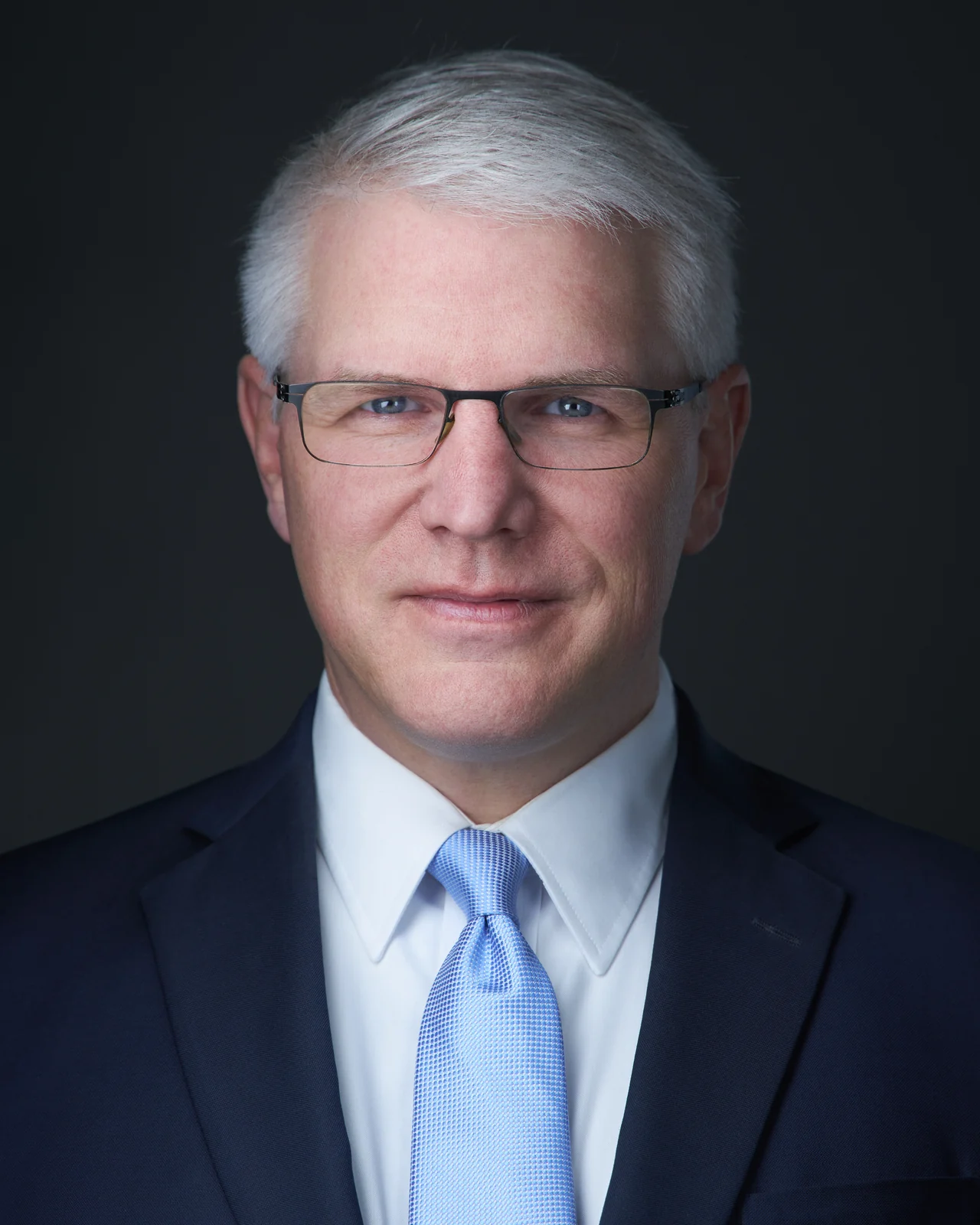
Andrew Flynn is a Commissioner in Mt. Lebanon, Pennsylvania, a municipal advisor working in public finance, and a volunteer firefighter and EMT. He writes about whether public institutions can still do what we ask of them. More about Andrew.