Two Blocks from the White House
Twenty-five years ago I worked two blocks from the White House. What I remember first about that morning is the sky. A reflection on what I believed about my country that day, what did not prove true, and why a nation's better angels have to be chosen rather than inherited.

Twenty-five years ago, I worked two blocks from the White House.
What I remember first about September 11, 2001, is the sky.
It was extraordinarily blue. The air was crisp in a way Washington had not been for months. Anyone who has lived through a summer in Washington knows the heat and humidity that settle over the city, and that morning felt like the first real break in it. It felt like fall, the kind of morning when you walked outside and immediately noticed that the season had changed.
It was beautiful.
That detail has stayed with me because of everything that came afterward. The photographs from New York capture some of it: that enormous blue sky behind the smoke rising from the towers. I remember the same sky over Washington. There is something unsettling, even now, about remembering how perfect the day itself was.
I was 26 years old. After the second plane struck the World Trade Center, it was obvious that what we were watching was not an accident. It was also obvious that if the United States was under attack, Washington was likely to be a target. Beyond that, we knew almost nothing.
Rumors moved through the city faster than facts. We heard that the Capitol had been bombed. Then it was another federal building. There were reports of explosions, additional planes and other attacks. We went to the roof of our building to try to understand what was happening and could see smoke rising in the distance. Eventually, we understood that it was coming from the Pentagon.
Looking back, I know there was enormous uncertainty in those hours. I just do not remember experiencing it as fear. Maybe that was because I was 26. Maybe it was simply temperament. I do not remember thinking that the country was going to collapse or that everything we knew was coming apart. I had an instinctive confidence that we were going to be okay. America had been attacked, but I believed we would absorb it, respond to it and continue.
At the same time, I remember having another thought almost immediately: we were going to war. I did not know where, against whom, or what form it would take, but it seemed inevitable. And with that came the knowledge that more people, many of them good people who had nothing to do with what had happened that morning, were going to suffer.
I remained downtown until about 3:30 that afternoon. When I was finally able to leave, what I saw is probably my most distinct memory of the day.
Washington was empty.
The city I knew as crowded, noisy and perpetually in motion had gone almost completely still. There were virtually no cars and no people. Around the White House, I remember seeing only a few military vehicles. This was the middle of a weekday afternoon in the capital of the United States, and the streets looked abandoned.
I drove out of Washington and past the Pentagon. I could see the wreckage. There is a difference between hearing that something has happened and seeing its physical consequences in front of you. For most of the day, the attack on Washington had existed for me as smoke on the horizon, reports on television and fragments of information moving through an office. Driving past the Pentagon made it tangible. A building that had always seemed permanent had been ripped open.
Yet even then, I do not remember feeling that America itself was fragile. If anything, I remember believing the opposite.
Some of my friends at the time were Muslim immigrants. Their experience of that day was different from mine. They were afraid, not only because America had been attacked, but because they understood almost immediately that anger over those attacks might be directed toward them. They knew that people might look at their names, their faith, their accents or where they had been born and see something threatening.
I remember being determined that they should not have to be afraid of their own country. I believed America was better than that. I believed that whatever anger and grief followed, Americans would understand the difference between the people who committed these attacks and Muslim Americans who had nothing to do with them. I believed that our commitment to each other as Americans would ultimately prove stronger than fear.
Twenty-five years later, I have to acknowledge that this did not prove as true as I hoped.
Muslim Americans, Arab Americans, Sikhs and others were harassed, attacked and treated with suspicion. Fear became a political force. The country went to war, and those wars lasted far longer and cost far more, in lives, treasure and moral clarity, than most of us could have imagined on that September morning. We invaded Iraq on premises that proved false. We made other decisions in anger and fear that deserve scrutiny. We sometimes confused strength with force, justice with vengeance and patriotism with acquiescence.
The history that followed September 11 does not permit a simple story in which America was attacked, came together and revealed only the best of itself. We did not always get it right, and we were not always good. But neither is the opposite story true. Our better angels were there when you looked for them.
They were there in the firefighters climbing the stairs of the World Trade Center while others came down. They were there in the passengers and crew of Flight 93, who understood only fragments of what had happened elsewhere and nevertheless chose to act together. They were there in the police officers, military personnel, medical workers, air traffic controllers and public servants who simply did what the moment required of them.
They were there in much smaller places too. In neighbors checking on neighbors. In people giving blood. In Americans standing beside Muslim friends and coworkers and telling them that they belonged here. In congregations reaching across religious lines. In countless moments that never became part of the historical record because they were simply one person deciding how to treat another.
That distinction has become more important to me as I have gotten older.
At 26, I think I understood America largely as something that existed. I believed in its institutions, its resilience and its basic capacity to withstand whatever had happened that morning. In many respects, I still do. But twenty-five years of experience in government, finance and civic life have changed the way I understand where that resilience comes from.
Countries do not possess character in the same way people do. Institutions do not have virtues independent of the people who sustain them. America is not automatically generous, courageous, tolerant or wise simply because those qualities appear in our founding documents or in the stories we tell about ourselves.
Those qualities have to be chosen. So do their opposites.
That may be the lesson of September 11 that has grown most important to me over time. We often talk about America’s ideals as though they were possessions handed down to us, but they are really obligations. Liberty, pluralism, democracy, the rule of law and the idea that people from extraordinarily different backgrounds can belong to one country are not facts of nature. They exist because people continually decide to practice them.
Sometimes we fail, and our history after September 11 contains plenty of those failures. It should make us more humble about our claims to national virtue and more skeptical of the idea that being American automatically puts us on the right side of every moral question. But humility is not the same thing as cynicism.
I still believe in the instinct I had at 26 that we would be okay. I simply understand the reason differently now. We would be okay not because America was somehow immune to failure, but because there would always be people trying to make it better. People willing to serve. People willing to challenge bad decisions. People willing to defend institutions while also demanding that those institutions live up to their purposes. People willing to stand beside a frightened neighbor and say: you belong here too.
That is where a country’s character actually resides.
September 11 is now passing from lived memory into history. Millions of Americans were not yet born when it happened, and the distance will only grow. We should remember those who died and honor those who served. We should also tell the truth about what came afterward, about the courage and the failures, the solidarity and the fear, the moments when America lived up to its ideals and the moments when it did not.
Perhaps most of all, we should resist the temptation to believe that our better angels simply appear when we need them. They have to be summoned. They have to be chosen.
Twenty-five years later, I still see that blue sky. And I still believe our better angels are there when we choose to look for them, and when we choose to become them ourselves.
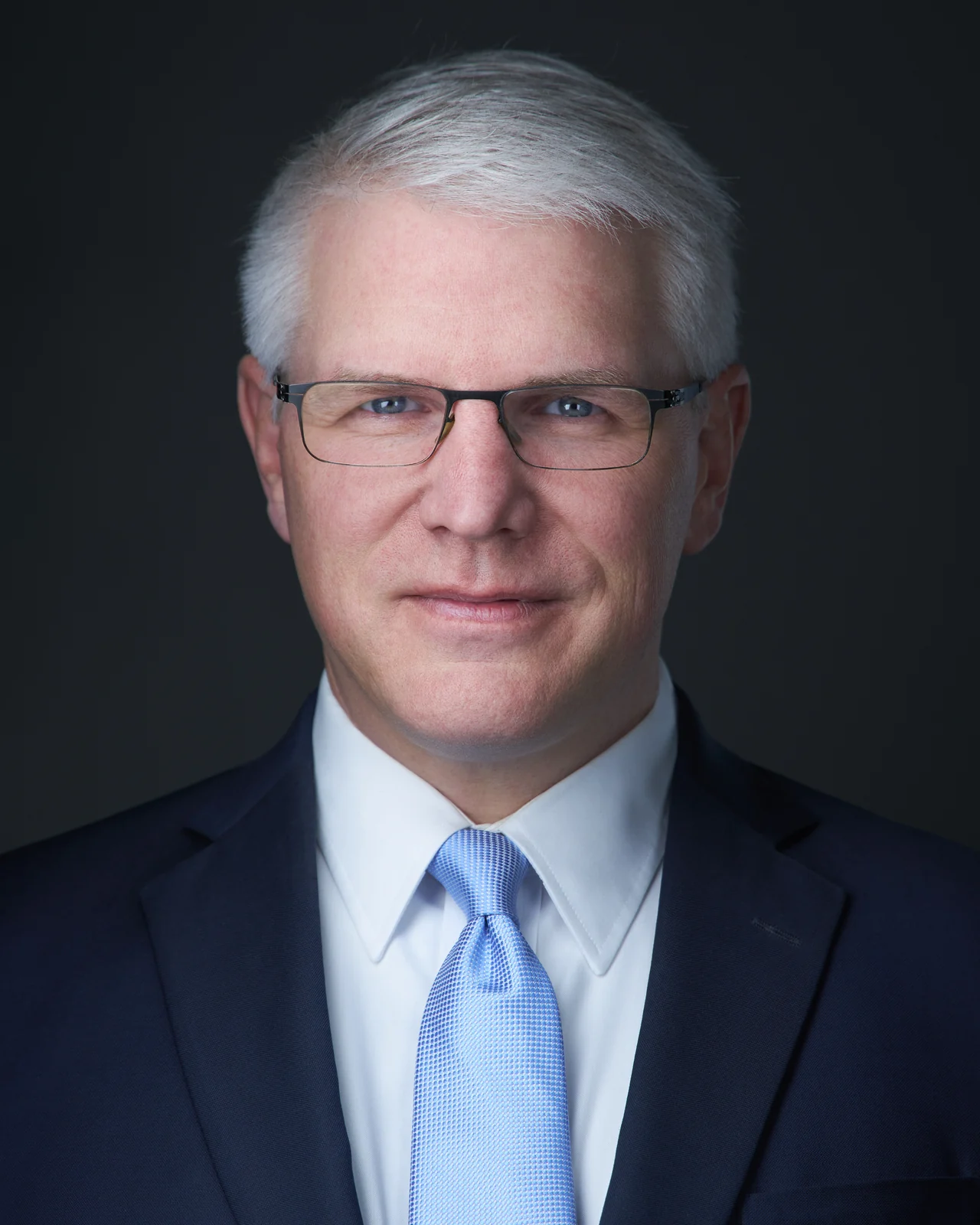
Andrew Flynn is a Commissioner in Mt. Lebanon, Pennsylvania, a municipal advisor working in public finance, and a volunteer firefighter and EMT. He writes about whether public institutions can still do what we ask of them. More about Andrew.