The Return on a Place
Much of what makes Mt. Lebanon worth living in is something no one owns alone. In a place with bones this strong, collective investment pays back more to everyone who lives here.
There is an often-used way to compare local governments. Look at the property tax rate. Look at the earned income tax rate. Put several neighboring communities side by side and ask why one charges more than another.
Taxes are real household expenses, and local government owes residents discipline about what it asks them to pay. But a tax rate is a price, not a measure of value. It tells you what a community costs. It says very little about what the community is worth, or about what it will take to keep that value intact.
In Mt. Lebanon, much of what makes the community worth living in is something no one owns alone.
What we own together
Most of us understand investment as a private act. We renovate a kitchen, replace a roof, plant a garden. Those investments matter, and they are ours.
But the value of every house in Mt. Lebanon depends heavily on things outside its property line. The street in front of it. The sidewalk that leads to a school or a business district. The park a few blocks away, the library, the pool, the trees that line the block, the pipes that carry water away in a storm.
No household can buy those things for itself. A family cannot build its own library or maintain its own mile of street. Together, we can, and the return reaches everyone at once: the family with young children and the retired couple, the homeowner and the renter, the resident who arrived last year and the one who will arrive in twenty.
Collective investment is some of the most productive investment a household makes. A family paying Mt. Lebanon’s municipal property tax on a home assessed at $250,000 pays about $1,125 a year. That is its share of streets, parks, a library, police and fire protection, recreation facilities and the public spaces that shape how the whole community looks and feels. Its share of the value those things create is far larger.
The same logic works in reverse. When shared assets decline, every property around them loses something, including the ones whose owners maintained their own homes perfectly.
Strong bones
Collective investment pays off more in some places than others, and Mt. Lebanon is one of the places where it pays off most.
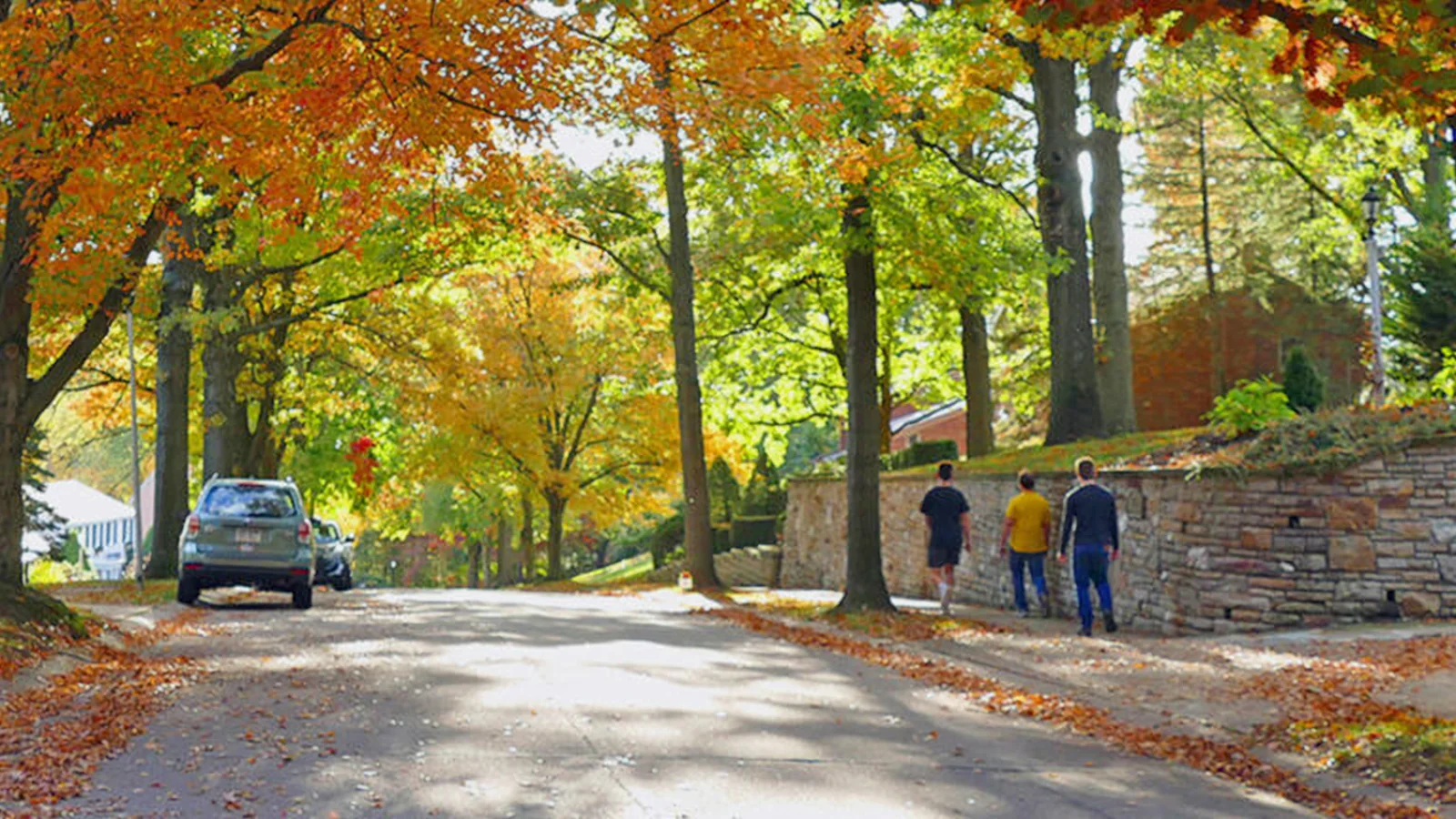
Mt. Lebanon was built when communities used land differently. Houses sit close together. Blocks are compact. Streets connect. Neighborhoods sit near schools, parks, transit and business districts, and many daily destinations are part of the community rather than a drive away from it. People who study places call this good bones: a physical structure worth building on.
The 2020 Census counted 34,075 people within Mt. Lebanon’s 6.08 square miles, about 5,606 residents per square mile. Bethel Park had about 2,869 per square mile, Upper St. Clair about 2,156 and South Fayette about 904. Population density is not the same as tax-base density, and the better fiscal measure would be taxable value per acre against the infrastructure needed to support it. But the difference is large enough to make the point: Mt. Lebanon fits considerably more community into each square mile.
This matters because local government maintains networks, not just households. A mile of road has to be resurfaced whether few homes or many sit along it. Sewers, storm lines, sidewalks, signals and public-safety coverage all extend across physical space. Compact development lets more households share each of those costs.
It also means each public investment reaches more people. A renovated park here is within walking distance of thousands of households. A streetscape improvement serves a business district that residents can reach on foot. A library upgrade serves a population concentrated around it. In a place with strong bones, a dollar of collective investment does more work, and serves more people, than it would almost anywhere else.
Density only works if the place stays desirable
There is a catch. Density is valuable when it produces a place where people want to live. A compact neighborhood with good streets, mature trees, maintained sidewalks, attractive parks, working infrastructure and nearby businesses can be extraordinarily desirable. The same density paired with deteriorating public assets is something very different.
The public realm is part of the value proposition. Rebuilding an old street or replacing a sewer is not simply paying a bill left by earlier generations. It is maintaining the platform on which the value of the whole community rests.
Two pressures at once
The cost of renewing that platform is not new. Mt. Lebanon’s streets, sewers, buildings and parks have been reaching the end of their useful lives for decades, and the community has been rebuilding them for just as long. What has changed is scale. Much of Mt. Lebanon was built within a few decades, so its systems age on overlapping schedules, and the obligation to replace them has been growing steadily.
At the same time, a new generation of residents is asking new things of the community. When residents were surveyed for the 2023 comprehensive plan, a majority named parks and recreation as their highest priority. People want fields that can be used after dark, playgrounds and courts within walking distance, a library designed for how people use libraries now, a business district worth spending an evening in, and streets that are safe to walk and bike on, not only to drive.
These are not luxuries layered on top of the real work. They are how a community stays desirable to the people deciding whether to move here, stay here and raise children here. Communities that stop investing in what the next generation wants tend to find, eventually, that the next generation has chosen somewhere else.
The two pressures compete for the same dollars, and each can crowd out the other. A community that only maintains what it inherited slowly becomes a museum of an earlier era’s priorities. A community that builds new amenities while deferring renewal hollows itself out from underneath. Mt. Lebanon needs both. Maintenance preserves the value we inherited. New investment creates the value the next generation will inherit.
Efficiency matters in both. Projects should be challenged, priorities set, grants and partnerships pursued, and services delivered as well as they can be. But efficiency does not repeal the lifecycle of an asset. There is a point at which spending less stops being efficiency and becomes deferral. Deferring the work usually changes when the bill comes due rather than whether it does, and it often makes the bill larger.
This year’s budget
These pressures are the real context for Mt. Lebanon’s budget conversation this fall.
One pressure is immediate. On April 30, the Pennsylvania Supreme Court held in Borough of West Chester v. Pennsylvania State System of Higher Education that a municipal stormwater charge was a tax, not a fee, because managing stormwater is a duty government owes the whole community rather than a service individuals choose to buy. Mt. Lebanon’s stormwater fee, which raised roughly $2 million a year, is going away as a result. The pipes, the federal permit and the flooding risk are not. That cost now moves onto the general budget.
I support raising the municipal earned income tax from 0.8 percent to 1.0 percent, along with a property-tax adjustment to be set through the budget process. Replacing the stormwater fee accounts for a significant portion of that increase. The rest reflects the two pressures above, which will not ease on their own.
How the burden falls matters. The earned income tax and the property tax reach different households in different ways, and the balance between them deserves an open debate at the Commission. So does every project the revenue would support.
The standard for that debate should not be the lowest possible tax rate. Nor should it be the highest level of spending a community can bear. The useful question is whether we are collecting enough, and using it well enough, to sustain the place residents expect Mt. Lebanon to be and to build the place the next generation is asking for.
Stewardship means handing it forward
Mt. Lebanon inherited something unusually valuable: established neighborhoods, walkable streets, mature trees, parks, business districts, public facilities, transit connections, and infrastructure built by generations who came before us. They built it collectively, and they built it for people they would never meet.
This inheritance is one of our greatest advantages. It is not permanent.
Every generation holds these assets for a while. We can let them wear down and leave a larger bill to the people who come next, or we can do what the people who built Mt. Lebanon did and invest together in a place worth handing forward, leaving it stronger than we found it.
The question before us is how much that requires, how we pay for it, and how we make sure every dollar does as much work as possible. In a community with bones this strong, the return on getting it right is shared by everyone who lives here, and by everyone who will.
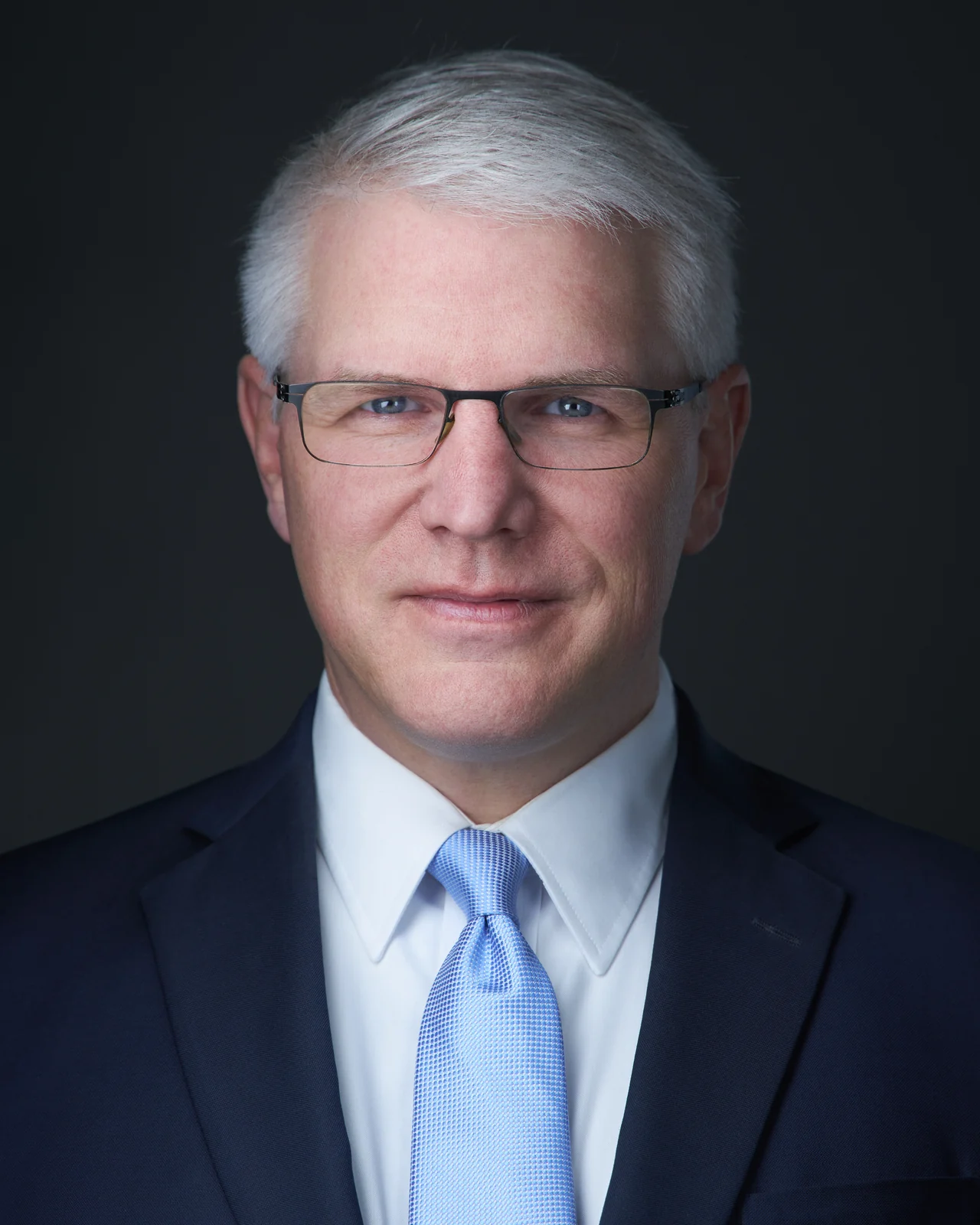
Andrew Flynn is a Commissioner in Mt. Lebanon, Pennsylvania, a municipal advisor working in public finance, and a volunteer firefighter and EMT. He writes about whether public institutions can still do what we ask of them. More about Andrew.